TE PŌ MĀRIE
Ngā Manu Huna is a live, two night broadcast of kiwi calls from Te Pēwhairangi, Aotearoa New Zealand. The project follows the rhythms of the maramataka, the Māori lunar calendar, and Te Papa Atawhai’s (Department of Conservation) annual kiwi call monitoring period. During the new moons of May and June, the website becomes Te Tioro A Te Kiwi — a livestream carrying the calls of kiwi across the world. Listeners around the world are invited to tune in during the first two hours of darkness, when kiwi are most vocal.
Next live broadcast
(Weather dependent)
6:00-8:00PM NZST (UTC+12)
Live
You are listening to the calls of North Island Brown Kiwi. Calls may be frequent or sparse, depending on weather, wind, and the movements of the kiwi.
I te mārie o te waenganui pō,
ka puta te tioro a te kiwi tāne
e rapu hoa ana mōna.
Ka puta te karanga a te kiwi tāne, ‘Kei roto i tēnei ngahere tētahi hoa mōku?’
Ka mārie anō te pō i tētahi wā.
Ka pakaru te mārie o te pō i te whakautu a te kiwi wahine,
‘E rapu hoa ana ahau, me tūtaki tāua.’
Ka whakautu a te kiwi tāne ‘āe, me tūtaki tāua.
Mākū koe e karanga, kia mōhio ai koe kei hea au.’
Ka whakautu te kiwi wāhine,
‘Āe, ka tūtaki tāua āianei.’
Sitting and listening to kiwi calling at night, this is what you hear.
The still of night is pierced by the shriek of a male kiwi hoping to attract a partner.
‘Is there anyone out there? calls the male kiwi. ’
The night falls silent again, then in the distance, the silence is broken with the piercing reply of a female kiwi,
‘I am looking for a partner, could we meet?’
‘Yes,’ replies the male kiwi ‘we must meet.
I’ll keep calling to give you my location’.
‘Yes,’ she replies, ‘I will meet you soon.’
How to listen
The broadcast runs for two hours after nightfall: 6:00–8:00pm NZST (UTC+12) If you are listening from outside Aotearoa New Zealand, check this time zone converter.
Audio is live and unedited — you may hear long quiet periods, wind, insects, or sudden bursts of kiwi calls. Due to the technology used, occasional buffering may occur.
If the stream drops due to weather or satellite conditions, it will reconnect automatically as soon as possible. Subscribers will be notified if the broadcast must be postponed.
Sign up for future broadcasts
Ngā Manu Huna is dedicated to Hugh Rihari (1943–2025), kaumātua,
Ngāti Torehina ki Matakā.
Ngā mihi aroha ki a koe, kua
whetūrangitia.
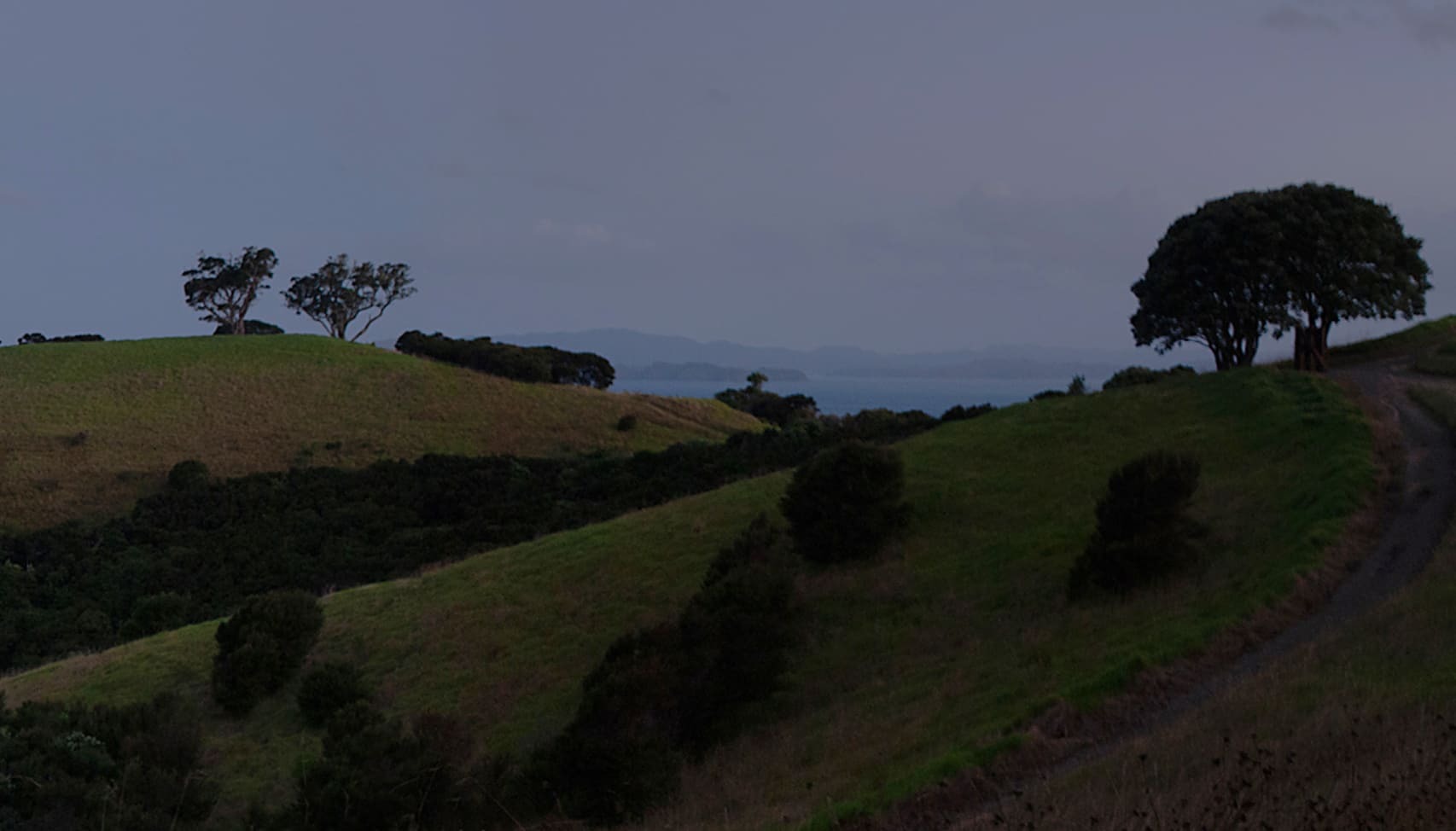
Ngā Manu Huna is a live artwork broadcasting the calls of kiwi from a remote valley in Te Pēwhairangi during Te Papa Atawhai’s annual kiwi call count period. The livestream travels outward through communications satellites and back around the world to an unseen audience, mirroring the kiwi calls as they search for one another in the dark of night. The project brings together maramataka, conservation science, and creative practice, situating contemporary broadcast technologies alongside ancestral systems, environmental observation, and shared acts of listening.
A broadcast will occur from
6:00–8:00pm New
Zealand Standard Time (UTC+12) at, or following, the new moons in
May and June.
Provisional dates 2026 – May 17th and June 15th, weather
dependent.
Te manu huna a Tāne – The hidden bird of Tāne – is the Māori phrase referring to kiwi, signifying their status as sacred, nocturnal birds living under the protection of Tāne Mahuta, the atua of the forest and its creatures.
In the Maramataka (Māori lunar calendar), the new moon, known as Whiro, signifies the start of a new monthly cycle and is a time for rest, planning, and reflection. Kiwi, like other nocturnal animals, are more active during this darker phase of the moon.
Te Papa Atawhai | Department of Conservation Kiwi Call Monitoring
Kiwi populations have experienced long-term decline due to introduced predators – dogs, stoats, ferrets, and cats – as well as ongoing land development that has reduced and fragmented their habitat.
In response to nationwide concerns, conservationists set up a nationwide network of listening stations in the early 1990s to monitor kiwi population trends over time.
In Te Tai Tokerau (Northland), 24 listening stations were established across four regions where kiwi were known to live. Department of Conservation staff and volunteers have returned to these sites every year to count kiwi calls, providing a longterm dataset on kiwi presence and fluctuations in kiwi populations over time.
Kiwi calls are listened for and counted during the first two hours of darkness, and during the dark phase of the moon (the new moon), for four nights per station. Listening takes place when the kiwi are searching for mates in New Zealand’s late autumn months of May and June. If weather conditions aren’t favourable, monitoring takes place in July. Human listeners are typically used to collect the data, but in some cases artificial listening devices are used.
Call count surveys remain a key tool for tracking kiwi population trends and assessing the effectiveness of conservation efforts at managed sites.
The area where these broadcasts originate has the highest known population density of North Island Brown Kiwi in Aotearoa, with numbers continuing to grow thanks to sustained predator management.
https://www.doc.govt.nz/about-us/science-publications/conservation-publications/native-animals/birds/kiwi-call-count-monitoring-of-northland-brown-kiwi/Technology
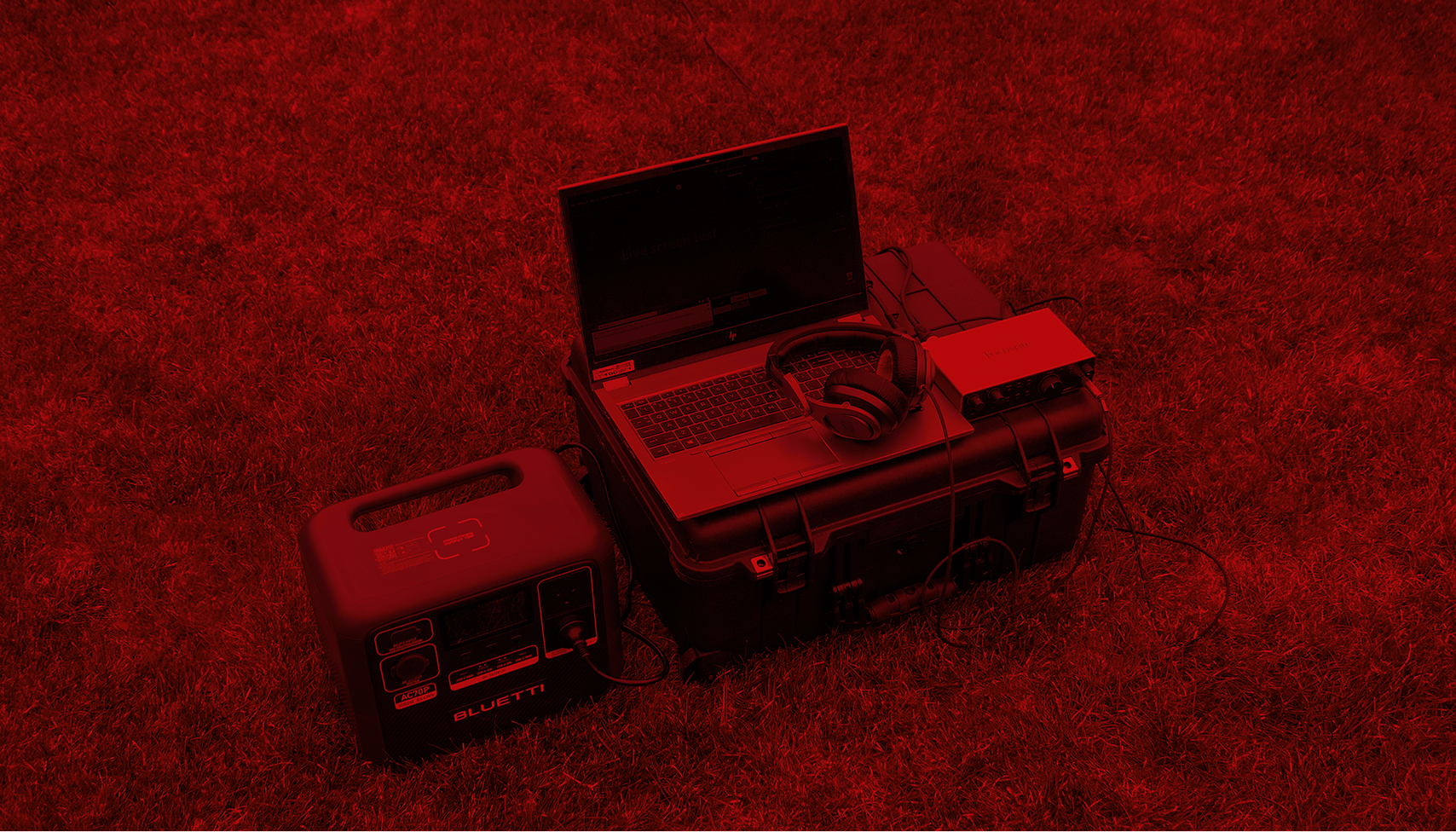
Ngā Manu Huna uses a portable satellite link to transmit live audio from this remote rural location.
Weather or technical conditions may temporarily interrupt the broadcast. We will restore the stream as soon as possible. Subscribers will be notified if the broadcast must be postponed.
Future Broadcasts
Ngā Manu Huna is planned as an annual broadcast aligned with the kiwi call monitoring period. Subscribers will remain on the list for future years unless you choose to unsubscribe.
Artists
Jenny Gillam and Eugene Hansen (Maniapoto) are Aotearoa New Zealand artists, writers, and curators whose collaborative practice spans sound art, moving image, installation, publishing, and artist-run initiatives. Their work combines field recording, research-led methodologies, and community partnership to explore ecological knowledge and Indigenous relationships to place. In Ngā Manu Huna, they investigate acoustic ecologies, and the cultural narratives that surround taonga species. Working alongside scientists, iwi, and local communities, they develop artworks that foreground listening as both method and connection, situating sound as a bridge between environmental observation and lived cultural knowledge.
Acknowledgements
Heartfelt thanks to Raewyn Ormsby-Rihari (Maniapoto) for the inspiration that sparked this project and for her ongoing support.
To Cinzia Vestena — Biodiversity Ranger, Te Papa Atawhai, Pēwhairangi (Department of Conservation, Bay of Islands), for her invaluable ecological and scientific guidance, and for generously sharing her expertise.
And to Simon Endres (Ngāpuhi) for his design work, which has added depth and clarity to this project.
Supported by Toi Rauwhārangi College of Creative Arts, Massey University

Contact
General and press enquiries info@ngamanuhuna.nz